Tel: (+39) 055 / 29 46 80 | Email: info@galilei.it



Cooking course “i 4 amici” – mediterranean cuisine in florence
- Home
- |
- Cooking course “i 4 amici” – mediterranean cuisine in florence

MINISTERO DELL’ISTRUZIONE,
DELL’UNIVERSITÀ E DELLA RICERCA
ITALIAN COURSES
COOKING, ART & CULTURE
TRANSLATIONS
LAST MINUTE
ENROLLMENT
ITALIAN LANGUAGE TEST
Among Italian language schools for foreigners, the Galilei Institute is unique in its exclusive specializing in one-to-one, personalized, full immersion courses specifically designed for professionals and students. Established in 1985, the Galilei Institute attained the highest prestige among language schools in Italy by providing its services to the leading companies of the world. Please take a moment to review our list of clients.
Among Italian language schools for foreigners, the Galilei Institute is unique in its exclusive specializing in one-to-one, personalized, full immersion courses specifically designed for professionals and students. Established in 1985, the Galilei Institute attained the highest prestige among language schools in Italy by providing its services to the leading companies of the world. Please take a moment to review our list of clients.
Location of the school
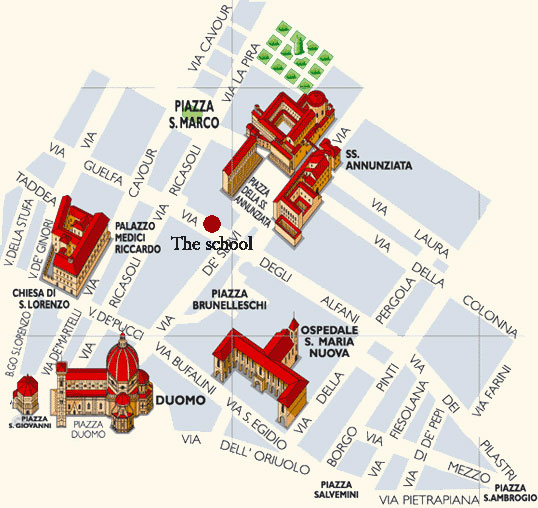
Italian Cooking classes in Florence for professionals and amateurs - Mediterranean cuisine in Florence
Italian cooking classes in Florence "i 4 amici" - mediterranean cuisine
about our italian cooking classes
A great range of delicious seafood dishes and hand-made pasta are caracteristic for the Italian cooking classes in Florence “I 4 Amici”. Still, this cooking courses program gives a great flexibility and can cover also traditional meat dishes as well as pizza and bread making. Thanks to the high professionalism of the restaurant and the chefs who teach this course, this program is suitable for both beginners as well as professional cooks who wish to specialize in the Italian cuisine. All lessons can be taught in English and Italian.
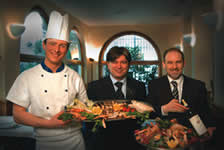
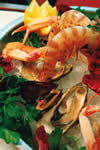
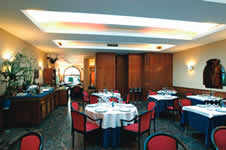
The restaurant “I 4 Amici”, specializes in seafood dishes and is one of the most renown in Florence. Its mission is to revive traditional recipes of Italian and Tuscan cuisine, adjust them for the modern tastes and offer a personal contribution to the celebrated Mediterranean Diet, which aside from being delicious, promotes health and long life.
These Italian cooking classes in Florence introduce you to the complex world of Italian food and wines, so that you can learn to more fully know, appreciate and enjoy them. Very competent chefs will train you and share with you aspects of authentic Tuscan gastronomic culture. Together with the chef you will prepare the recipes studied, hence at the end of the course you will have lived an unforgettable culinary experience.
The Italian cooking classes in Florence involve the preparation of an entire menu, from the “antipasti” (appetizers) to the “dolci” (desserts). At the end of each session, after having prepared the recipes, you will sit down at the restaurant and dine on your creations, accompanied by the most suitable wines.
Our Italian cooking classes in Florence can be followed by anyone. No particular requirements nor enrollment in our Italian courses are requested to attend this programm. The only prerequisite to participate in this course is your love for cooking and the Italian cuisine.
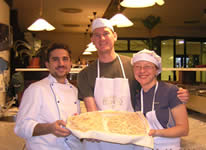
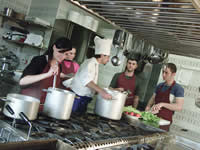
italian cooking classes OUTLINES
- Each session lasts 3 hours
- All students will receive a certificate of participation together with the list of the recipes they prepared, as well as the apron and the hat they used during the course
- The course will be taught in English and Italian
- The Italian cooking classes in Florence can be arranged for a single person as well as for small groups of up to a maximum 4 participants*
This course can be attended for a minimum of one week to a maximum of 4 weeks
We encourage people to tell us in advance which Italian dishes they would like to learn to prepare so that we can satisfy some of their personal expectations and tastes.
ANTIPASTI – STARTERS
- Ragu ai funghi
- Crostini toscani
- Panzanella
- Coccole
- Ficattole
PASTA FATTA IN CASA – HOME-MADE PASTA
Preparation of home-made pizza dough and pasta including how to cut the various pasta types/shapes:
- “gnudi ” al sugo di piccione o al burro e salvia
- gnocchi rossi alle code di gamberi
- malfatti ai freschi sapori dell’orto con dadini di pomodoro fresco
- orecchiette zucchine pinoli e noci orecchiette
- risotto con verdure, funghi e taleggio
- tagliatelle speck ed asparagi
- tortelli del “Mugello” al sugo di anatra
- spaghetti al pomodoro
Preparation of the following sauces:
- Carrettiera
- Carbonara
- Amatriciana
- Pesto
- Ragù di carne
- Ragù ai funghi
ALCUNI TIPI DI MENU – SOME MENUS:
Menu toscano
- Pappa al pomodoro
- Pollo con olive, spezie e vino bianco
- Biancomangiare con salsa
Menu romantico
- Mezzelune con ricotta e spinaci
- Rollé di manzo
- Verdure di stagione
Menu selvaggio
- Pappardelle sulla lepre
- Quaglie sul crostone
- Verdure di stagione
Menu Tutto Mare
- Calamari fritti
- Risotto allo scoglio
- Totani in inzimino
Menu d’inverno
- Cavolo con le fette
- Arista pillottata al forno
- Verdure di stagione
Menu del fornacino
- Affettati al coltello e sott’oli
- Penne strascicate
- Peposo alla fornacina con fagioli
DOLCI – DESSERTS
Dolci tipici toscani
- Panna cotta con salsa di fragole
- Tiramisù
- Crespelle dolci
Dolci di cioccolato
- Ricette a base di cioccolato
- Pasta genoise al cioccolato
- Ganache di copertura
- Frutta glassata
- Pralineria
- Mousse
SCHEDULE OF THE italian cooking classes in florence
The Italian cooking classes in Florence at the restaurant “I 4 amici” as scheduled as following:
Morning | Lunch | OR | Afternoon course | Dinner | |
| Monday | 9am – 12am | from 12am | 3.30pm – 6.30pm | from 6.30pm | |
| Tuesday | 9am – 12am | from 12am | 3.30pm – 6.30pm | from 6.30pm | |
| Wednesday | 9am – 12am | from 12am | 3.30pm – 6.30pm | from 6.30pm | |
| Thursday | 9am – 12am | from 12am | 3.30pm – 6.30pm | from 6.30pm | |
| Friday | 9am – 12am | from 12am | 3.30pm – 6.30pm | from 6.30pm |
- Single students can choose to attend the course either in the morning or in the afternoon.
- Groups can only attend the course during the afternoon.
BEGINNING DATES OF our italian cooking classes
2026
| Jan | Feb | Mar | Apr | May | Jun | Jul | Aug | Sep | Oct | Nov | Dec |
| 05 | 02 | 02 | 06 | 04 | 01 | 06 | 03 | 07 | 05 | 02 | 07 |
| 12 | 9 | 9 | 13 | 11 | 08 | 13 | 10 | 14 | 12 | 9 | 14 |
| 19 | 16 | 23 | 20 | 25 | 22 | 20 | 24 | 21 | 19 | 23 | 21 |
PRICES IN EUROS per person
1 week | 2 weeks | 3 weeks | 4 weeks | |
| one-to-one course | 1215 | 2300 | 3325 | 4200 |
| two-to-one course | 990 | 1880 | 2720 | 3420 |
| small group course * | 820 | 1540 | 2235 | 2800 |
* If the minimum quota of participants (3 students) is not reached, small group lessons will be converted to two-to-one or one-to-one lessons with two thirds the number of hours per day.
The prices of the Italian cooking classes in Florence include:
- Italian Cooking classes from Monday to Friday
- Dinner or lunch included in the course
- Ingredients for cooking
- Apron and hat
- Books, notebooks and the list of the recipes
- Enrollment fee