Tel: (+39) 055 / 29 46 80 | Email: info@galilei.it



Italian art history
- Home
- |
- Italian art history

MINISTERO DELL’ISTRUZIONE,
DELL’UNIVERSITÀ E DELLA RICERCA
ITALIAN COURSES
COOKING, ART & CULTURE
TRANSLATIONS
LAST MINUTE
ENROLLMENT
ITALIAN LANGUAGE TEST
Among Italian language schools for foreigners, the Galilei Institute is unique in its exclusive specializing in one-to-one, personalized, full immersion courses specifically designed for professionals and students. Established in 1985, the Galilei Institute attained the highest prestige among language schools in Italy by providing its services to the leading companies of the world. Please take a moment to review our list of clients.
Among Italian language schools for foreigners, the Galilei Institute is unique in its exclusive specializing in one-to-one, personalized, full immersion courses specifically designed for professionals and students. Established in 1985, the Galilei Institute attained the highest prestige among language schools in Italy by providing its services to the leading companies of the world. Please take a moment to review our list of clients.
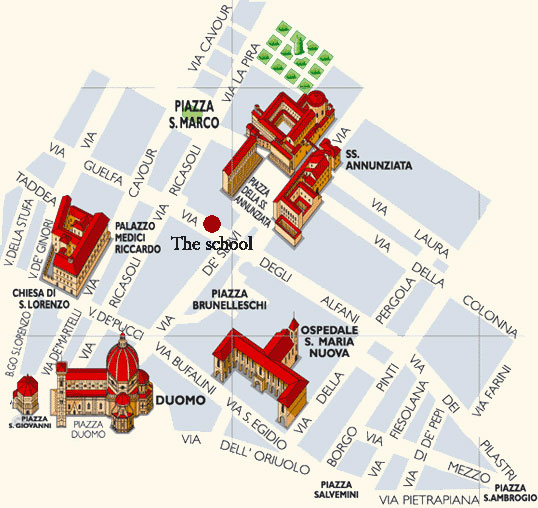
Location of the school
Art history courses in Florence - Italian art history
italian art history courses in florence
about our art history courses
Do you love art? Are you awed by the sculpture, frescoes, and paintings of the Renaissance masters? Would you like to experience some of this work first hand?
Then, we would like to invite you to a journey into the past. We offer Italian art history courses on an individual basis and in small group classes (3-4 participants) conducted by enthusiastic experts who will guide you through all the evolutions of the different artistic currents.
the program of our art history courses
Our art history courses in Florence meet three times a week (for a total of 9 hours per week) and begin with an introductory part, followed by church and museums visits that will allow you to experience art history first hand, and to see with your own eyes some of the masterpieces of the greatest Italian artists. All the lessons can be taught in English and Italian; individual courses can also be organized in Spanish and French.
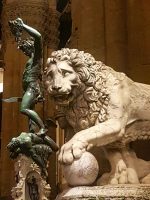
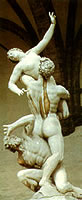
The program of our art history courses encompasses art from Ancient Greece to Modern Art to provide context to the primary study of the art history of the Renaissance period, represented in Florence by some of the most important artists of all times. The masterpieces of the 15th and the 16th centuries will be analyzed and interpreted.
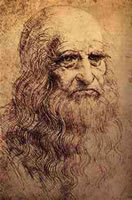
In addition, you will study the lifestyles and philosophy of artists like Giotto, Masaccio, Botticelli, Brunelleschi, Michelangelo, Leonardo da Vinci and Raphael. Artists are reviewed in terms of their working environments, life events, and their personal styles and characteristics. The social context of the period will also be considered in order to better understand the development of the artists’ culture and way of thinking.
The length of our art history courses in Florence is flexible and can spread from 1 week to 3 months. They are designed to give a general overview to those who can spend only a few days, and to offer a more in-depth understanding for those who can attend the course for a longer period of time.
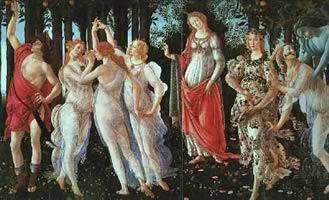
The goal of our courses is to enhance the knowledge, understanding, and appreciation of Florentine Renaissance art for each student.
Our art history courses can be followed by anyone. No particular requirements nor enrollment in our Italian courses are requested to attend this program.
SCHEDULE OF our ITALIAN ART HISTORY COURSES
Morning | OR | Afternoon | |
| Monday | 9am – 12am | 2pm – 5pm | |
| Wednesday | 9am – 12am | 2pm – 5pm | |
| Thursday | 9am – 12am | 2pm – 5pm |
For the one-to-one, two-to-one and self-composed group courses a personalized schedule is possible.
BEGINNING DATES OF THE ART HISTORY COURSES
One-to-one, two-to-one and self-composed group courses can start on any day requested.The small group courses start on the dates listed below.
2026
| Jan | Feb | Mar | Apr | May | Jun | Jul | Aug | Sep | Oct | Nov | Dec |
| 05 | 02 | 02 | 06 | 04 | 01 | 06 | 03 | 07 | 05 | 02 | 07 |
| 12 | 9 | 9 | 13 | 11 | 08 | 13 | 10 | 14 | 12 | 9 | 14 |
| 19 | 16 | 23 | 20 | 25 | 22 | 20 | 24 | 21 | 19 | 23 | 21 |
PRICES IN EUROS per person
1 week | 2 weeks | 3 weeks | 4 weeks | 3 months | |
| One-to-one course | 465 | 790 | 1150 | 1480 | 4100 |
| Two-to-one course | 360 | 620 | 870 | 1120 | 2990 |
| Small group course * | 250 | 430 | 580 | 720 | 2160 |
Prices of the art history courses in Florence include museum entrance fees (excluding the price of the tickets of Accademia, Uffizi and Palazzo Pitti that have to be paid separately).
* If the minimum quota of participants (3 students) is not reached, small group lessons will be converted to two-to-one lessons with two-thirds the number of hours or one-to-one lessons with half the number of hours.
ITALIAN ART HISTORY - INTERESTING ARTICLES
Would you like to know more about Italian art history, visit the section Art History.
The secret of our quality is:
Excellent teachers with years of training and the school's size, which has been kept rather small in order to give everyone the opportunity to receive individual attention.