Tel: (+39) 055 / 29 46 80 | Email: info@galilei.it



Language specialization
- Home
- |
- Language specialization

MINISTERO DELL’ISTRUZIONE,
DELL’UNIVERSITÀ E DELLA RICERCA
ITALIAN COURSES
COOKING, ART & CULTURE
TRANSLATIONS
LAST MINUTE
ENROLLMENT
ITALIAN LANGUAGE TEST
Among Italian language schools for foreigners, the Galilei Institute is unique in its exclusive specializing in one-to-one, personalized, full immersion courses specifically designed for professionals and students. Established in 1985, the Galilei Institute attained the highest prestige among language schools in Italy by providing its services to the leading companies of the world. Please take a moment to review our list of clients.
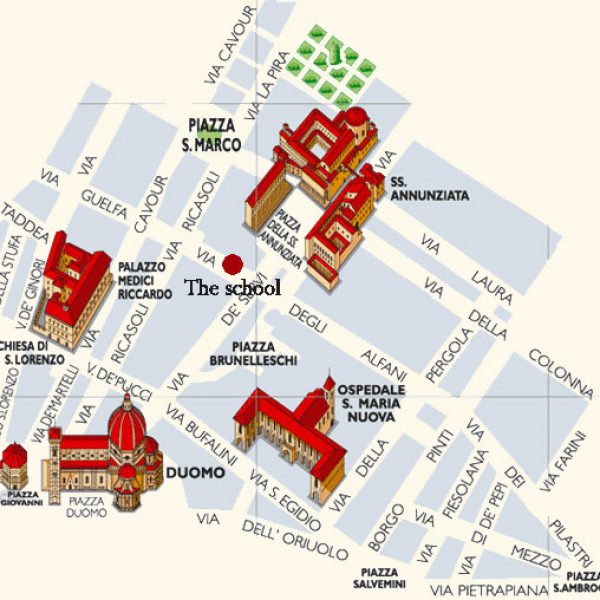
Location of the school
italian business courses & language specialization
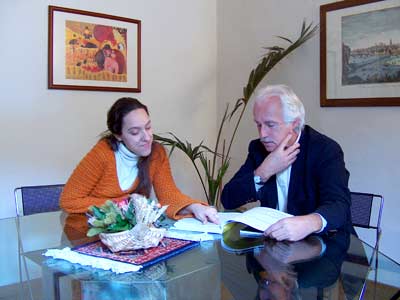 Are you looking for Italian business courses for any specific work field? The one-to-one courses give the opportunity of focusing on a specific aspect and vocabulary of the Italian language. This is why many persons, who are looking for Italian business courses or language specialization courses and exam preparation, are choosing an Italian one-to-one course with the deepening of one of the following features:
choose your italian business course
The best and fastest way to learn Italian that you may need for your business is with our one-to-one course. The lessons of the Italian one-to-one course are combined with specific material and thematic conversations. If you wish, particular situations of your work or the field in which you need the Italian language can be studied and reproduced in class. Furthemore, if there is some specific material (of your work etc.), which can serve as a base for these lessons, you can bring them with you (preferable written in Italian or English).
The lessons of vocabulary are given by an expert of the field.
Please find following a short description of the most current topics and fields of Italian business courses and language specialization. Still, the list does not mean to be complete. The program can be adapted to any request of language specialization.
ITALIAN BUSINESS COURSES & SPECIALIZATION OF PARTICULAR VOCABULARIES
- For executives and business people a teacher of economics gives lessons of terminology on financial reports, marketing, import-export, commercial policy of Italian industries, insurance companies and banks.
- Secretaries study and compose business correspondence on such subjects as inquiries and offers of merchandise, complaints and reminders. Participating in our Italian business courses they are also trained in the use of sentences and expressions which are recurrent in telephone conversations.
- For lawyers and social workers vocabulary lessons are given by an expert in jurisprudence. These lessons illustrate Italian civil and criminal law as well as the laws relevant to the legislation of commerce (contracts, bankruptcy, agreements) and to the family (marriage, adoption, divorce, inheritance).
- For translators and interpreters the program of Italian business courses includes the analyses and composition of commercial, political and economic texts as well as from texts of literature and science, depending on the field you are working.
Language specialization for the fields of economics, marketing, finance, tourism, etc.
EXAM PREPARATION & STUDY OF ITALIAN LITERATURE
- For students who are preparing for exams of Italian language and literature in their own countries, or exams to enroll in Italian universities, the lessons are based on textbooks or excerpts from books of their own interest.
- For students who need to pick up parts of the Italian program of their school, the lessons are based on their curriculum.
STUDY OF LIBRETTOS FOR OPERA SINGERS
- For opera singers, phonetics and vocabulary are practised and studied through the use of librettos chosen by the student. Analyses and comprehension of the librettos.
REFRESHER COURSE FOR ITALIAN TEACHERS ABROAD (non-Italians)
- For Italian teachers, whose mother tongue is not Italian, revision of advanced grammar and language structures and ideas for the planning of the lessons at their school.
...or send a personalized question
You may also be interested
You may also be interested in our Italian culture courses. We also remind you that our individual Italian courses are aimed at all those who wish to immerse themselves in an intensive study; Italian courses during the weekend are also available, as well as our Italian language courses online.